
Tizheruk
Alaska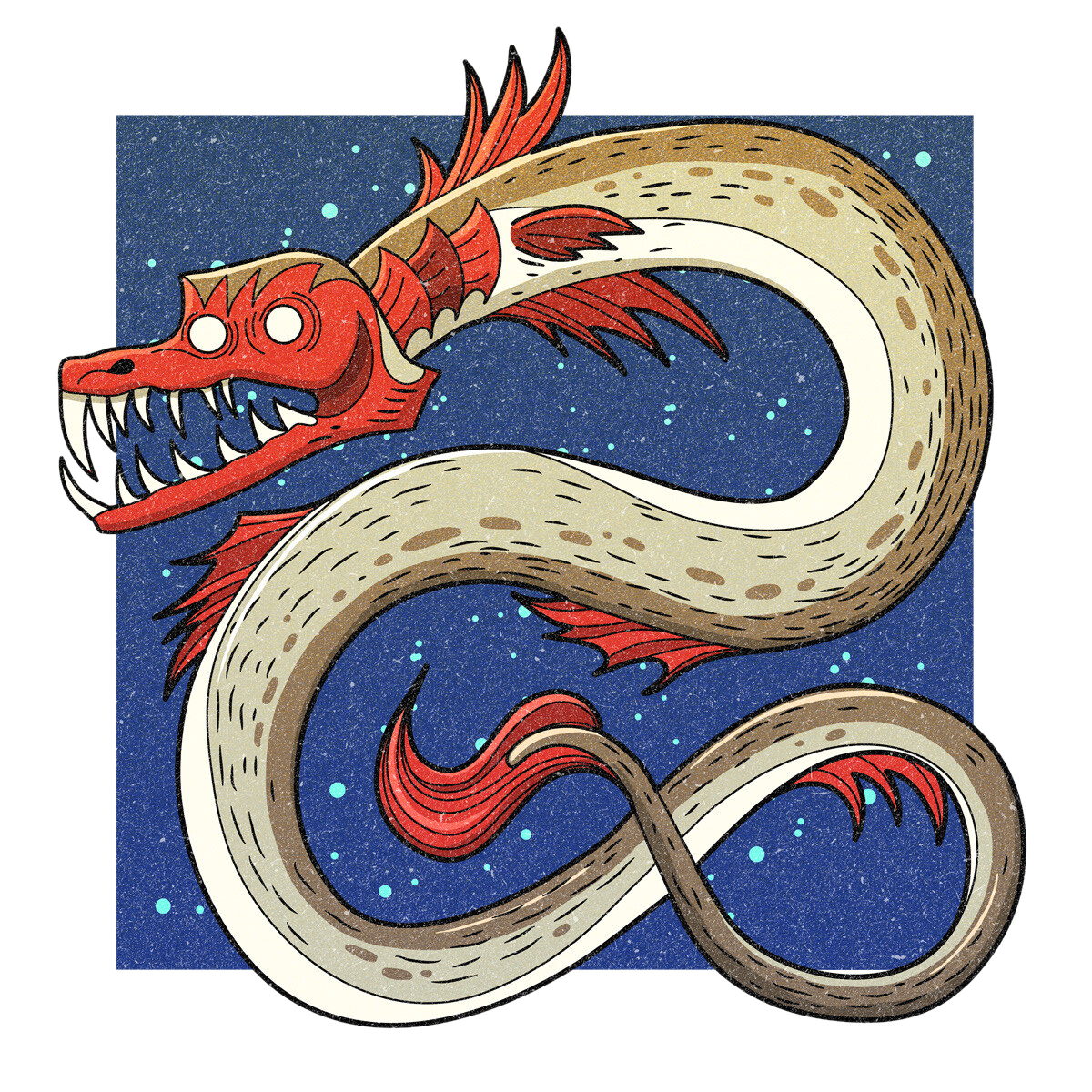
Etymology
In the Inupiaq language, 'Tizheruk' translates to 'the long-tailed one'. It is also known as Pal-Rai-Yûk or Tisikpuk.
Anatomy
A sea serpent measuring up to 15 feet in length, characterized by a disproportionately massive head that can stretch up to 7 feet long. Biological accounts vary significantly; some describe a transparent, eel-like body that reveals the contents of its stomach, while others describe a thick-furred beast with a nightmare hybrid of crocodile and wolf facial features.
Ecology
Inhabits the frigid coastal marine environments of the Bering Sea, though it is biologically capable of venturing inland via shallow rivers and streams.
Behavior
A solitary and stealthy ambush predator that possesses the terrifying biological ability to compress its massive body, allowing it to slip through creeks barely a foot deep. It snatches victims from piers without a sound or splash, and is allegedly attracted by tapping noises on boat hulls.
Mythology
Deeply ingrained in Inuit oral tradition, it serves as a cultural symbol representing the profound dangers and mysteries of the natural ecosystem and the balance between humans and nature. The creature features heavily in Inuit art, carved into ivory and etched onto bone.