
Wendigo
Minnesota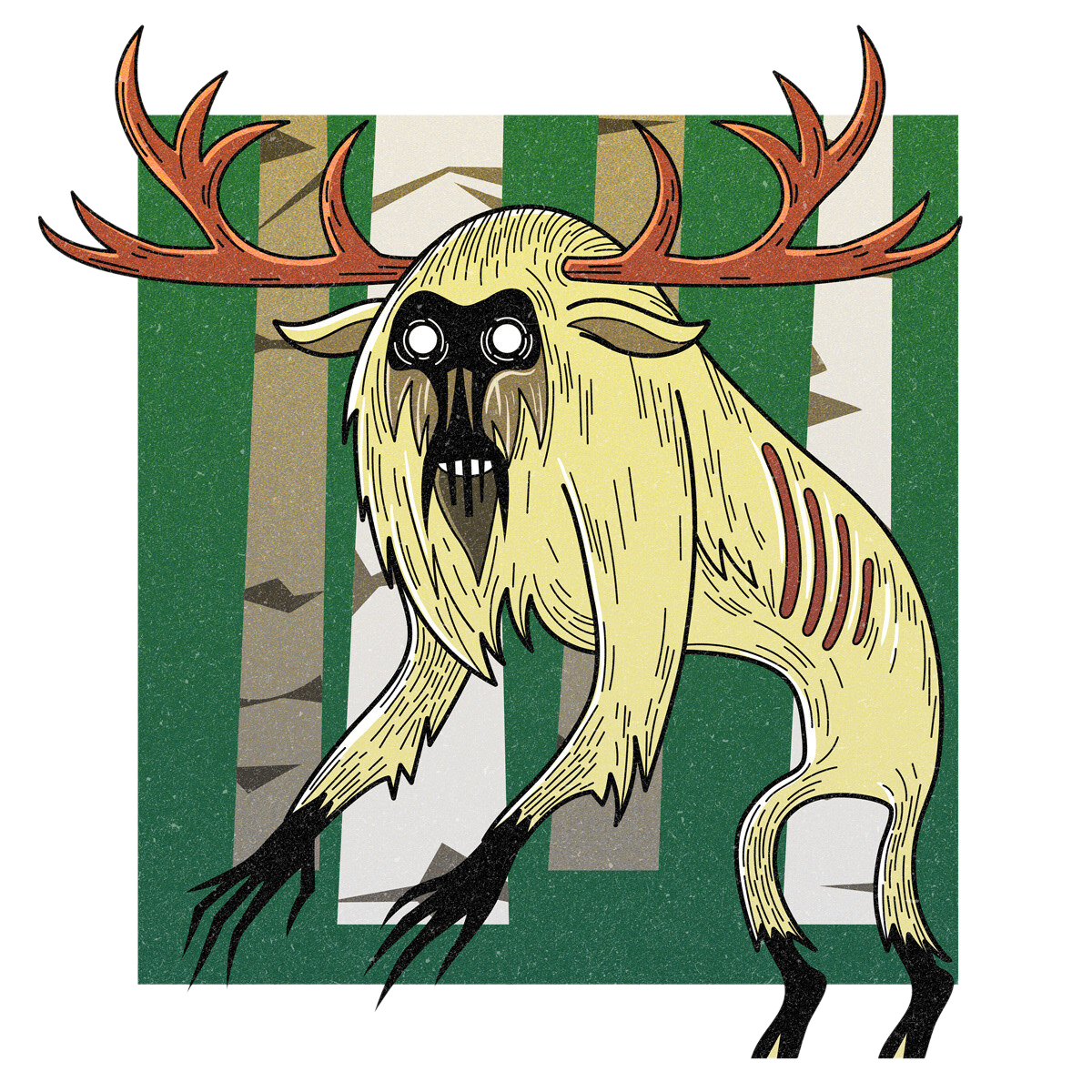
Etymology
Derived from the Algonquian languages, including the Ojibwe 'wiindigoo' and Cree 'wīhtikōw', with proto-Algonquian roots potentially translating to 'owl'.
Anatomy
It is a gigantic humanoid, gaunt to the point of extreme emaciation, with ash-gray, desiccated skin pulled tightly over protruding bones. It features deeply sunken eyes, tattered bloody lips, and supposedly possesses a heart of ice. It constantly emits a foul odor of decay and corruption.
Ecology
Strongly associated with the freezing, famine-prone boreal forests of the North. Natural Prey: Human beings.
Behavior
Driven by an insatiable, cannibalistic metabolism, it hunts humans relentlessly. In some folklore, it retains human cognition and speech, exhibiting intelligent tool use, autocannibalism, and the cruel ability to taunt its victims before devouring them.
Mythology
Originating in Algonquian folklore as a cautionary tale against greed and taboo cannibalism during harsh winters, the creature gave its name to 'Wendigo psychosis'—a culture-bound psychiatric syndrome characterized by an intense craving for human flesh. Modern scholars also heavily utilize the entity as a metaphor for the destructive, consuming nature of colonialism and ecological destruction.