
Menehune
Hawaii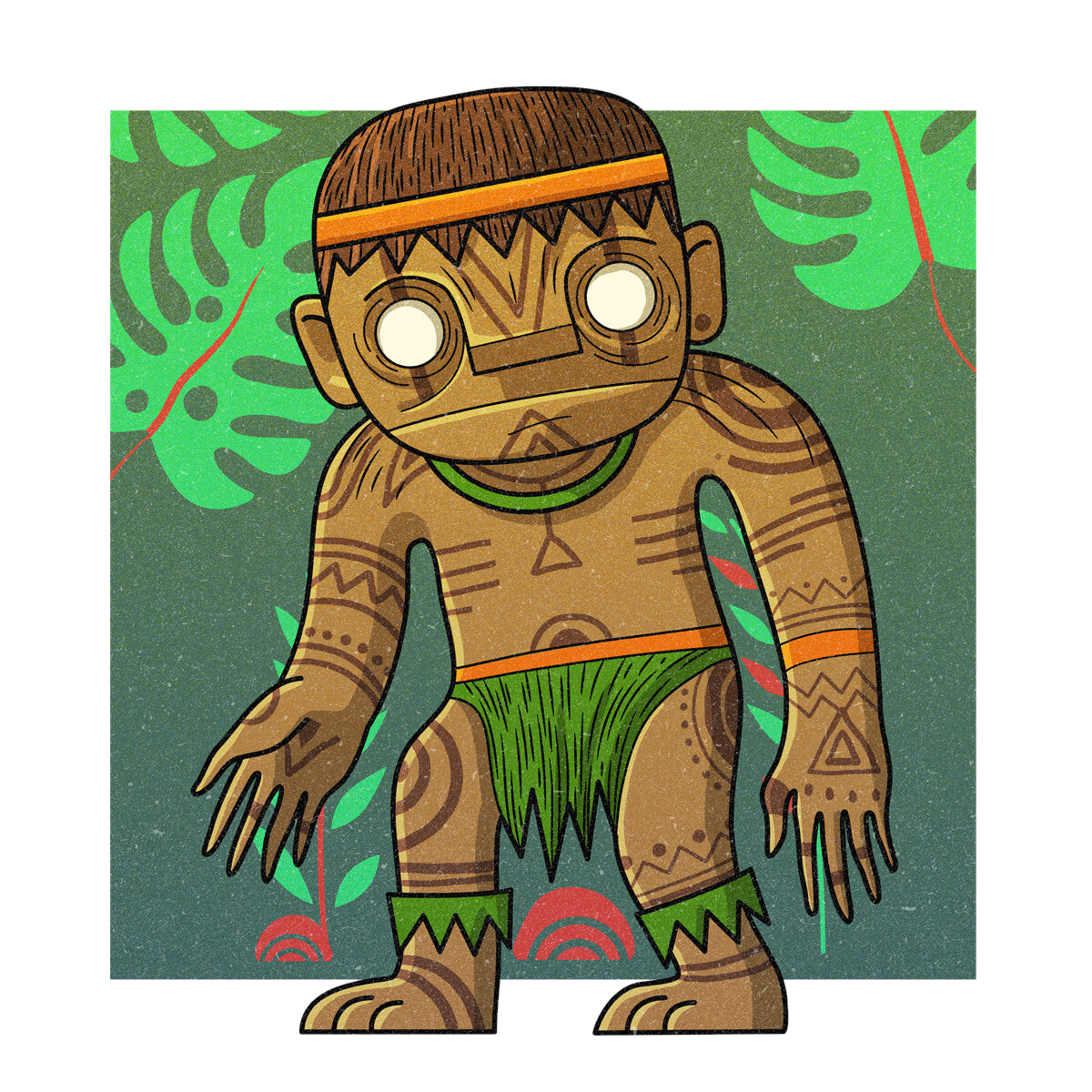
Etymology
Anthropologists trace the term to the Polynesian 'manahune', originally denoting a people of lowly social status, which was later adapted into a diminutive definition.
Anatomy
They are a dwarf-like race of people, with most rare reports describing them as about two feet tall, though some claim they are as tiny as six inches. They are completely invisible to anyone except their own children and specific humans connected to them.
Ecology
They reside strictly within the deep forests and hidden valleys of the Hawaiian Islands, isolated from human settlements.
Behavior
They are superb, secretive craftspeople who operate exclusively during the night to construct massive temples, fishponds, roads, and canoes. If a project is not completed before dawn, they permanently abandon it. Their primary dietary staple is the banana.
Mythology
Hawaiian folklore attributes several still-existing architectural masterpieces to them, such as the Alekoko fishpond and Kīkīaola ditch. Folklorist Katharine Luomala argues the myth was generated post-European contact, blending indigenous terms with European tales of brownies and elves.