
Jackalope
Wyoming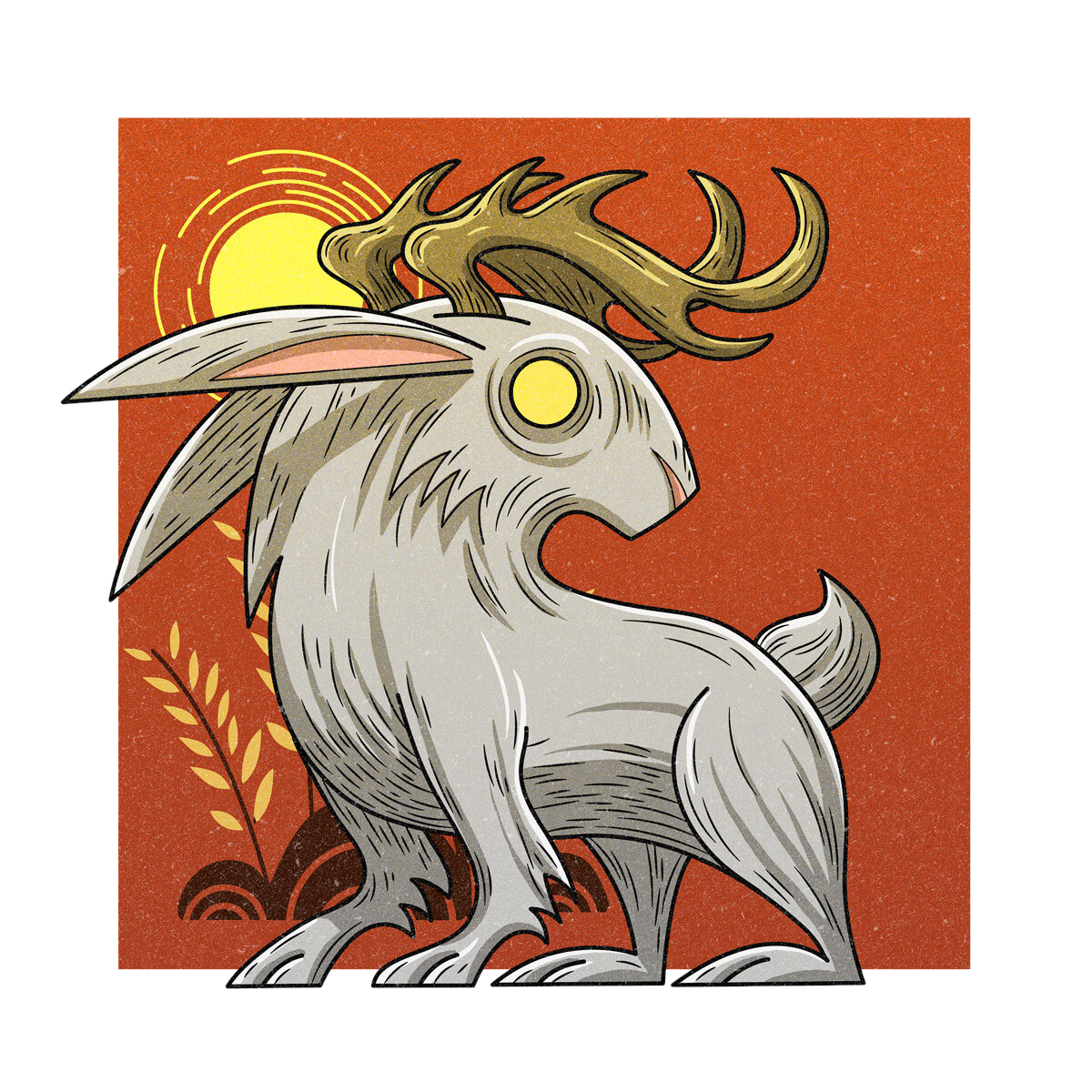
Etymology
A portmanteau of the words 'jackrabbit' and 'antelope'.
Anatomy
It physically resembles a standard North American jackrabbit but features sharp, deer-like antlers protruding from its head. The biological foundation for these horns is an infection of the Shope papilloma virus.
Ecology
Endemic to the plains of Wyoming. Natural predators include hunters seeking 'Jackalope Hunting Licenses' issued exclusively in the town of Douglas.
Behavior
It is a highly elusive, whiskey-loving creature with a remarkable vocal structure capable of 'throwing its voice' and perfectly mimicking human tenor melodies to sing along with cowboys around distant campfires. It breeds exclusively during lightning storms.
Mythology
The modern legend was popularized in 1932 by Douglas Herrick, a hunter who grafted deer antlers onto a jackrabbit carcass to sell to hotels. However, global historical texts have documented 'horned hares' for centuries.