
Chessie
Maryland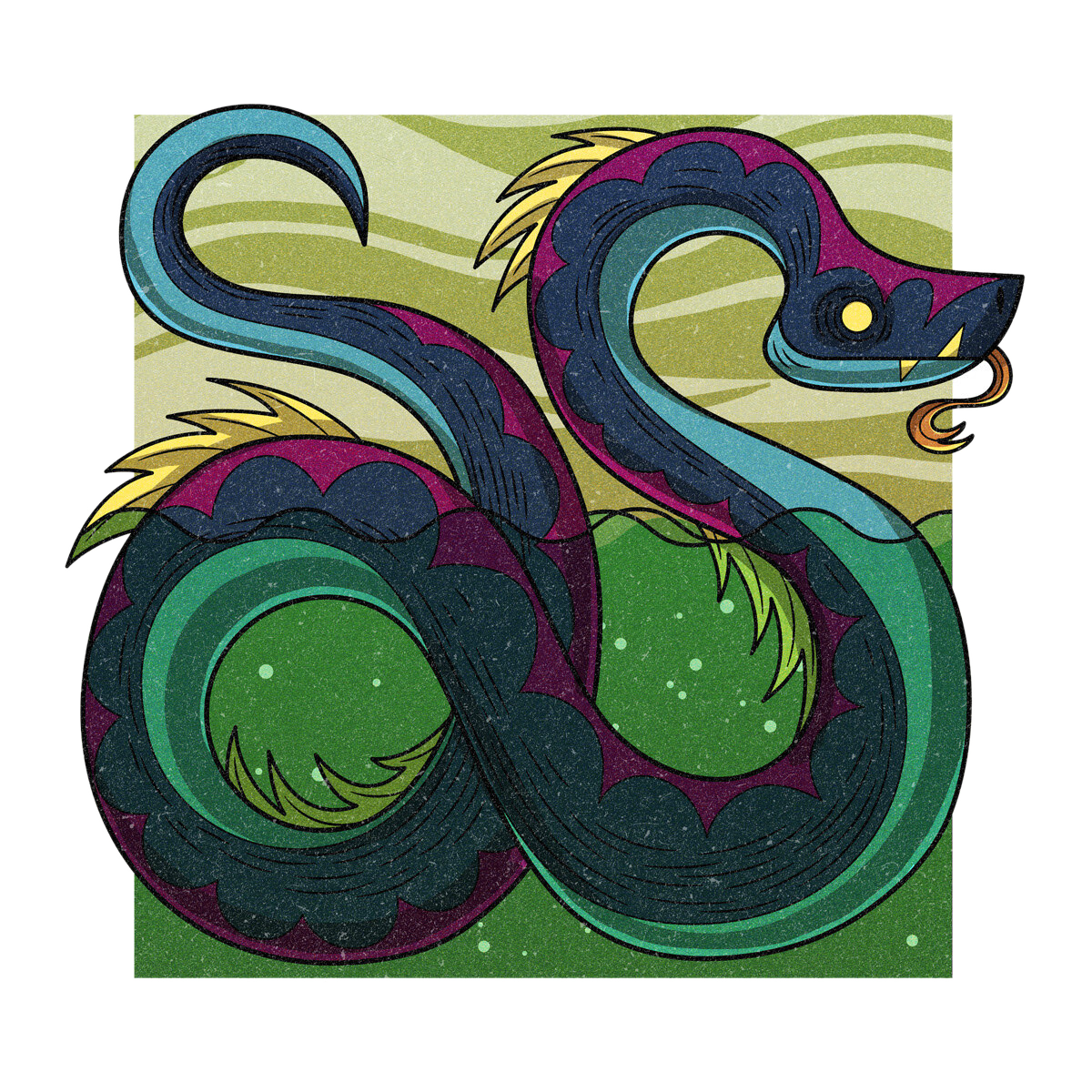
Etymology
Named 'Chessie' as a localized nod to the famous Scottish Loch Ness Monster.
Anatomy
It is a dark, finless, snake-like creature measuring 25 to 30 feet in length. It features a slender, football-shaped head resembling a horse, and biological flippers for steering. Biologists note that alleged sightings frequently lack undulating serpentine motion, instead matching the 'smooth footprint' left by marine mammals.
Ecology
Endemic to the estuarine ecosystems of the Chesapeake Bay and the Potomac River. Biologists confirm Florida manatees occasionally migrate to these precise waters.
Behavior
It swims gracefully just below the surface, occasionally breaching its head and tail simultaneously. Highly evasive, it actively avoids close human interaction.
Mythology
Sightings peaked in the 1980s following a famous 1982 video recording by Robert and Karen Frew. The U.S. Fish and Wildlife Service embraced the monster in 1986, publishing educational coloring books featuring Chessie to promote ecological health and anti-pollution efforts.